
"Zero Trust doesn't mean nobody is trusted. It means trust is never assumed from network location alone, and is re-verified continuously instead of granted once at login."
Zero Trust gets sold as a product and understood as a slogan. It's neither — it's an architectural shift in how access decisions get made, and it's adoptable in stages by a business that doesn't have an enterprise security budget.
1. What Zero Trust Actually Means, Operationally
Traditional network security draws a perimeter (firewall, VPN) and trusts anything inside it. Zero Trust replaces that with continuous, identity-centric verification: every request is checked against device posture and user identity, regardless of whether it originates inside or outside the office network.
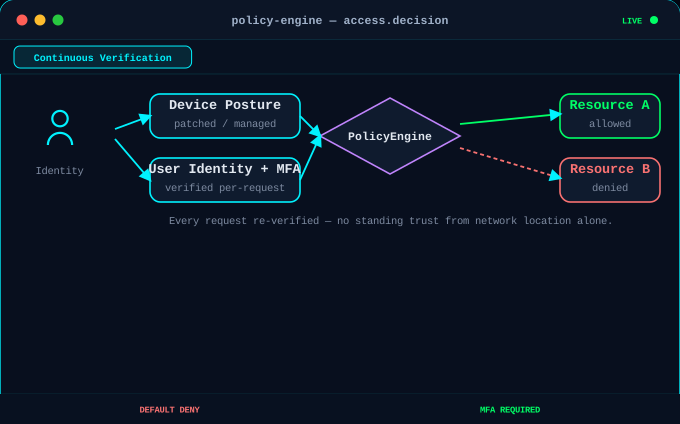
Security Principle
Never trust, always verify — per request, not per session.
2. The Three Practical Pillars
- Identity-centric access: every access decision is tied to a verified user identity and MFA, not just network location.
- Device posture: is the requesting device patched, managed, and free of known compromise indicators?
- Micro-segmentation: systems are broken into smaller zones so a compromise in one doesn't grant automatic reach into others.
3. A Realistic Starting Point
Full Zero Trust adoption is a multi-year program for large enterprises with dedicated security teams. For a small Kenyan business, the honest starting sequence looks different:
| Stage | What it looks like in practice |
|---|---|
| 1. Identity first | Enforce MFA everywhere; kill shared/generic logins |
| 2. Least privilege | Audit who has access to what; remove standing admin access |
| 3. Device hygiene | Require OS/browser patching before granting access to sensitive systems |
| 4. Segment critical systems | Separate production data access from general staff network access |
| 5. Continuous verification | Move from "trusted once at login" to session-level re-checks for sensitive actions |
4. What This Is Not
It is not a single product purchase. Vendors selling a "Zero Trust appliance" as a drop-in fix are selling a component, not the architecture. It is also not a reason to rip out existing VPN/firewall infrastructure overnight — those still have a role during a staged transition.
Guiding Principle
Start with identity. Everything else in Zero Trust builds on knowing, with confidence, who and what is making the request.
Skills Demonstrated: Security Architecture · Zero Trust Design · Identity & Access Management · Staged Security Roadmapping
Related service: Cybersecurity Consultant