
"Risk that isn't scored gets handled by whoever is loudest in the room."
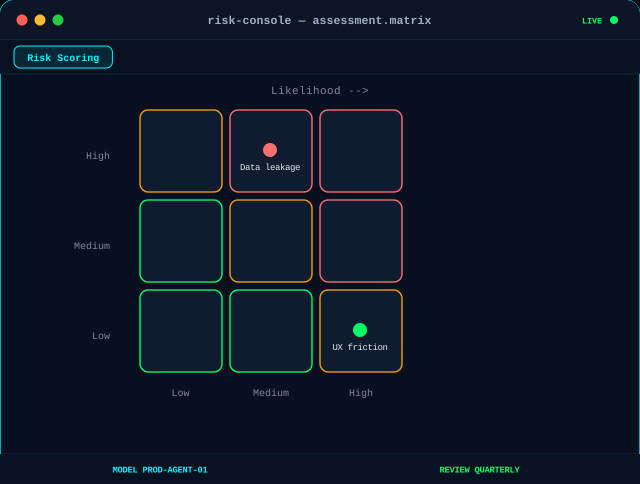
This is a structured likelihood-times-impact framework for scoring risk in a deployed AI system, so risk decisions are comparable across projects instead of ad hoc — whichever risk was raised most recently doesn't automatically win.
1. The Matrix
Every identified risk gets scored on two axes: how likely it is to occur, and how severe the impact is if it does. The combination determines priority.
Scoring Principle
High impact, low likelihood still needs a mitigation plan — it does not need panic.
2. Risk Categories Worth Scoring
- Data risk: training/context data leakage, unlawful processing, poisoning.
- Output risk: hallucination, bias, harmful or non-compliant generated content.
- Operational risk: availability, cost runaway, vendor dependency.
- Security risk: prompt injection, tool-call abuse, unauthorized access to agent capabilities.
3. Scoring in Practice
| Score band | Response |
|---|---|
| Red (high x high) | Block deployment until mitigated; owner assigned; re-review before launch |
| Amber (mixed) | Deploy with monitoring and a documented mitigation timeline |
| Green (low x low) | Accept the risk explicitly — document the decision, don't ignore it silently |
4. What This Is Not
It is not a substitute for a real security assessment — the matrix prioritizes what needs review, it doesn't replace the review itself. And a risk register that's never revisited after the initial assessment is a snapshot, not a management tool.
Skills Demonstrated: AI Risk Management · Security Assessment · Risk Scoring Frameworks
Related service: AI Security · Related: AI Governance